

Criminology
Curriculum Intent
Our Criminology curriculum is designed to engage students with a deep and critical understanding of crime and criminal behaviour within our society. Our intent is to nurture inquisitive, analytical, and socially aware young people who are equipped with the knowledge and skills to explore the causes of criminality, the role of the criminal justice system, and the impact of social control. Our curriculum is ambitious and inclusive, providing all students, regardless of background, with access to thought-provoking and relevant content that reflects real-world issues, contemporary case studies, and the evolving nature of crime.
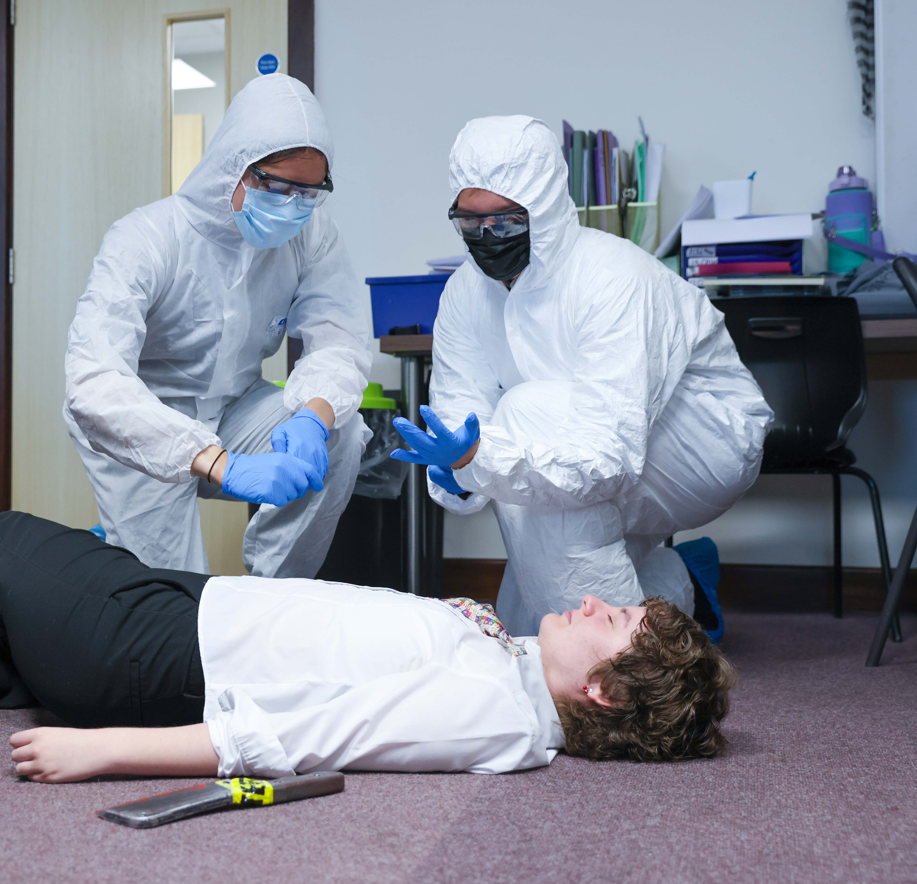
We deliver a balance of academic depth and applied learning, supporting students to evaluate theories of criminal behaviour, assess the effectiveness of investigative techniques, and understand the process from crime scene to courtroom.
Our curriculum for Criminology at DSTC is designed:
- To cultivate ethical awareness and empathy through the exploration of justice, human rights, and inequality,
- To encourage critical engagement with real-life criminal cases and the role of agencies of social control,
- To inspire students to consider future pathways in criminology, criminal justice, law, forensic science, and social policy.
Complementary Subjects:
There are a number of subjects that when studied together, enhance understanding of Criminology, support skill development and broaden career pathways. These include:
- Psychology
- History
- Geography
- Health and Social Care
- Biology
- Media
- English
KS5
Students who are interested in the Criminal Justice System or Forensics often choose to take Criminology at Key Stage 5. Students complete the WJEC Level 3 Applied Diploma in Criminology over two years, exploring four key units that investigate the nature of crime, criminological theories, the process of criminal investigations, and how criminal cases are prosecuted and judged.
Techniques to develop long-term memory and mastery of subject content—such as retrieval practice, case study analysis, and structured evaluation—are embedded throughout the curriculum. There is a strong emphasis on independent learning and the development of effective study skills, including research, critical thinking, and ethical reasoning.
Our curriculum prepares students for higher education, apprenticeships, or careers within the criminal justice sector. Many are introduced to roles they may not have previously considered, such as Forensic Psychologist, Probation Officer, Criminal Investigator, Legal Executive, or Youth Justice Worker.
|
|
Autumn 1 |
Autumn 2 |
Spring 1 |
Spring 2 |
Summer 1 |
Summer 2 |
|
Year 12 |
Unit 1: Changing Awareness of Crime |
Unit 1: Changing Awareness of Crime |
Unit 2: Criminological Theories |
Unit 2: Criminological Theories |
Unit 2: Criminological Theories
|
Unit 3: Crime Scene to Court Room |
|
Year 13 |
Unit 3: Crime Scene to Court Room |
Unit 3: Crime Scene to Court Room |
Unit 4: Crime and Punishment |
Unit 4: Crime and Punishment |
Unit 4: Crime and Punishment |
|
Core Textbooks:
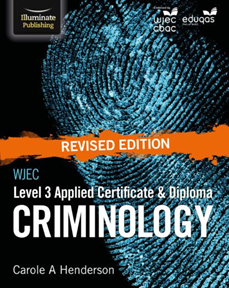
This book is in line with the latest specification and matched to the best-selling revised edition Student Book. Written by an experienced Criminology teacher and senior examiner,
https://www.illuminatepublishing.com/product-category/criminology
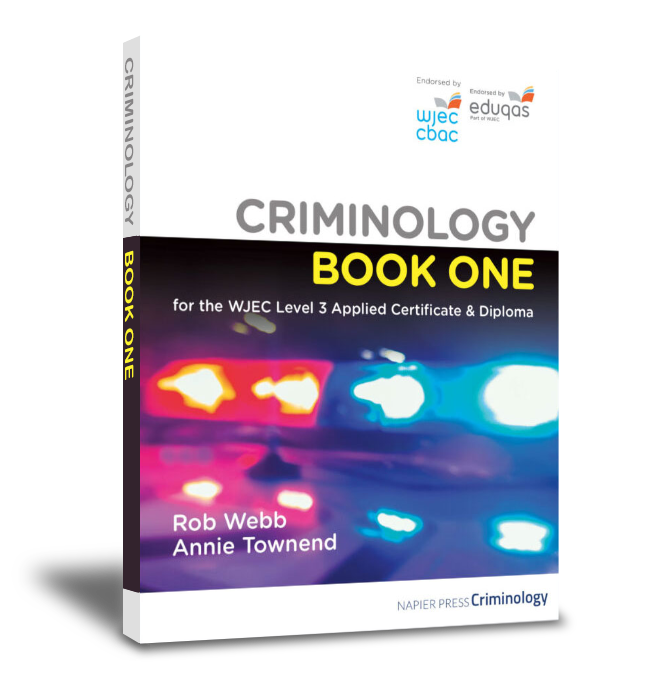
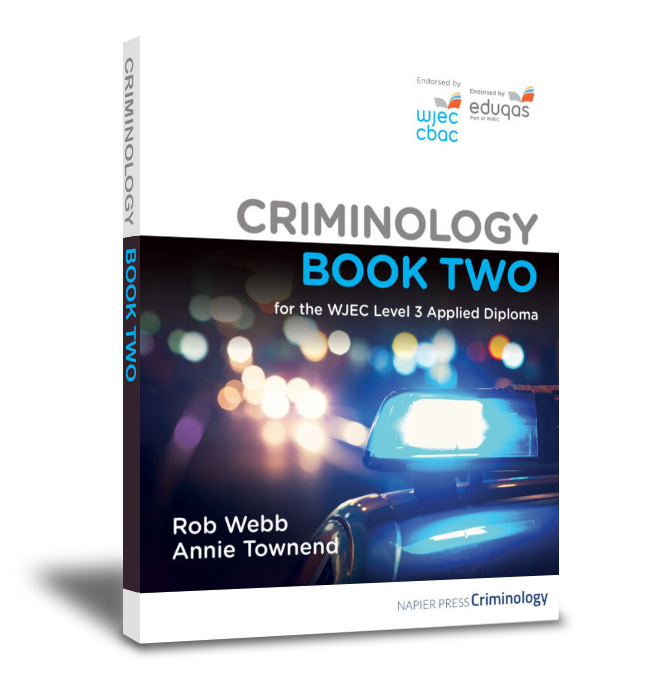
Endorsed by the WJEC Eduqas exam board as providing high quality support for students studying for the Level 3 Applied Certificate or Diploma in Criminology, these books provide everything students need for success.
https://napierpress.com/buy-criminology-books/
Blogs:
- A blog from the British Society of Criminology all about current issues on crime, criminology and criminal justice. https://thebscblog.wordpress.com/
- The Centre for Criminology at Oxford University have produced a blog about timely issues. https://blogs.law.ox.ac.uk/centre-criminology-blog/2
- The leading crime and postcode data research and analysis platform. https://www.ukcrimestats.com/blog/
- A blog on crime and justice from The Guardian. https://www.theguardian.com/uk/crime-and-justice-blog
- The site is run by Jon Robins. Jon is a journalist and has written about the law and justice for the national papers and specialist press for 15 years. Jon won the Bar Council's legal reporter of the year award in 2015. https://www.thejusticegap.com/
Podcasts:
- The series reflects this department's world-leading research and teaching by providing talks that encompass topics such as rights and justice, politics, penal culture, crime and mental health and immigration. https://player.fm/series/criminology
- A true crime podcast that takes a deep dive into some of the most famous cases in the annals of crime. https://player.fm/series/series-2409410
- A podcast hosted by two doctoral students that discusses true crime, criminological and criminal justice issues, and promotes research. https://player.fm/series/crimeversation
- A podcast from Sage - a leading publisher in social sciences journals - on criminology. https://player.fm/series/sage-criminology
- We examine lesser known UK cases in depth, talk to true crime authors, review products/shows and interview other experts in the field of UK True Crime to offer you the very best insight and analysis. https://audioboom.com/channel/uk-true-crime-podcast
Documentaries/ TV Shows:
- Students are encouraged to explore real-world case studies and contemporary issues through resources such as Channel 5’s Crime documentary collection, which offers engaging insights into criminal investigations, forensic science, and the justice system. https://www.channel5.com/browse/Crime
- Channel 4’s True Crime collection provides thought-provoking documentaries that challenge students to critically examine high-profile cases, miscarriages of justice, and the societal impact of crime. https://www.channel4.com/collection/true-crime-on-channel-4
Any other true crime documentaries on other subscription services such as Netflix, Amazon and Apple TV.